2026-10-21
Verbal forms of 'going'
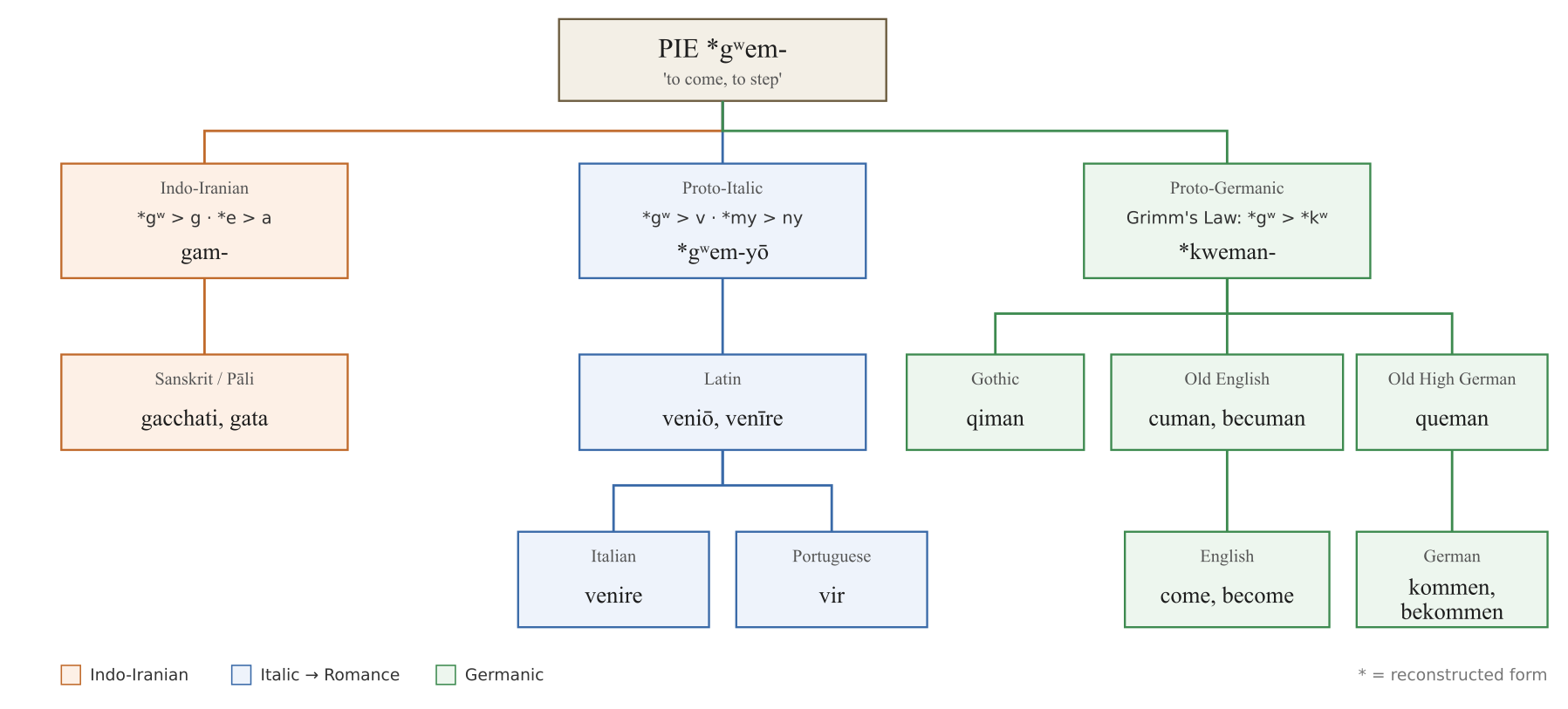
√gam・1 a (go) gacchati [√gam + a + ti] (+acc) goes; walks; moves; wanders around; travels
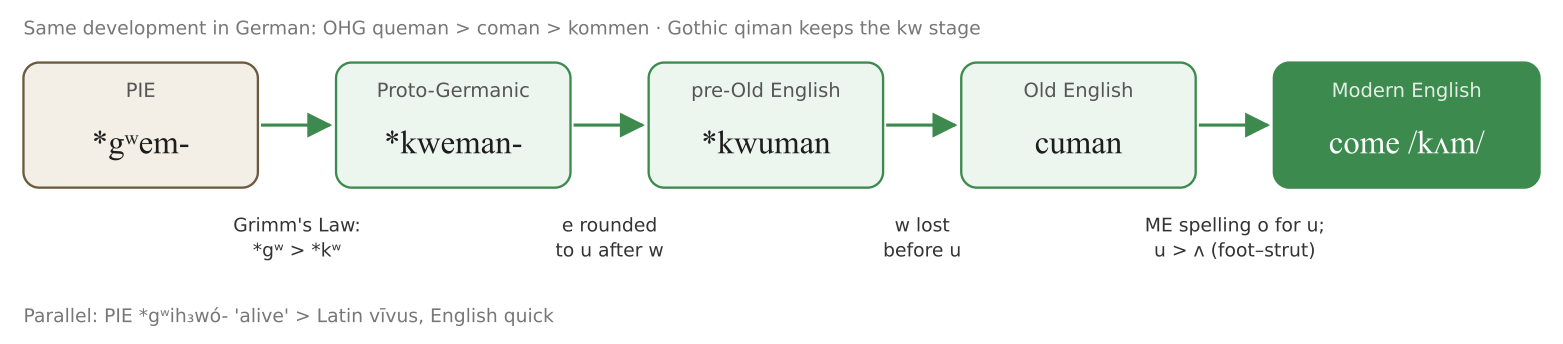
(European sibling cognates: EN 'come', IT 'venire', PT 'vir')
√kam・1 a (go) kamati [√kam + a + ti] (+instr) goes; travels; flies (by)
(not a variant of Pāli √gam: from Sanskrit √kram 'to step')
√yā・1 a (go) yāti [√yā + a + ti] (+acc) goes; goes to; goes forward; proceeds; travels
Example quotes
gacchati [√gam + a + ti] goes; walks; moves
Translate: The faithful man goes to the village with an all-white chariot.
Sammādiṭṭhipaccayā ca aneke kusalā dhammā bhāvanāpāripūriṁ gacchanti. (AN 10.107)
| aneka | (adj) many; various; countless [na > an + eka] adj, from na eka |
| pāripūri 1 | (fem) fulfilment; completion; maturity (of) [pari + √pūr + i] |
Āyudo balado dhīro, / vaṇṇado paṭibhānado;
Sukhassa dātā medhāvī, / sukhaṁ so adhigacchati. (AN 5.37)
| paṭibhānada | (adj) giving eloquence; providing wit [paṭibhāna + da] adj, comp |
| dātar 1 | (masc) giver; donor (of) [√dā + tar] masc, agent, from dadāti |
| medhāvī | (masc) intelligent man; wise man [√medh + ā + vī], [medhā + vī] |
| adhigacchati 1 | (pr) gets; finds; acquires; obtains [adhi + gaccha + ti] |
Andhabhūto ayaṁ loko, / tanuk'ettha vipassati;
Sakuṇo jālamuttova, / appo saggāya gacchati. (Dhp 174)
| andhabhūta | (adj) blind; ignorant [andha + bhūta] adj, comp |
| tanuka 1 | (adj) small; few [√tan + u + ka], [tanu + ka] adj, from tanu |
| sakuṇa | (masc) bird masc |
| jāla 1.1 | (nt) net; snare; entanglement [√jal > jāl + *a] nt |
| mutta 2.1 | (pp) released; freed; liberated [√muc + ta] pp of muñcati |
| appa 1 | (adj) few; not many; not much adj |
| sagga 1.2 | (masc) heaven; paradise [√sar + ga] masc, abstr |
- gaccheyya (opt) could go; would move; would walk
- gacchissati (fut) he will go
- agacchi (aor) he went
- agamāsi (aor) he went
- gantvā (abs) having gone
- gantuṁ (inf) to go (for a purpose)
āgacchati [ā + √gam + a + ti] (+acc) comes (to); arrives (at); reaches
gata [√gam + ta] (pp.) (+acc) gone (to); went (for)
sugata [su + √gam + ta] adj. faring well; going well; fortunate; who has reached the destination; lit. well gone
samannāgata [saṁ + anu + ā + √gam + ta] (pp.) (+instr) possessing; endowed (with); having; lit. going together
ariyasāvako buddhe aveccappasādena samannāgato hoti
| avecca 1 | (ind) perfectly; absolutely; [ava + e + tya] ind, adv, ger of aveti |
| pasāda 1 | (masc) inspiration; faith; trust; confidence (in) [pa + √sad > sād + *a] |
"Anujānāmi, bhikkhave, vassaṁ upagantun"ti.
Atha kho bhikkhūnaṁ etadahosi --- "kadā nu kho vassaṁ upagantabban"ti?
Bhagavato etamatthaṁ ārocesuṁ.
"Anujānāmi, bhikkhave, vassāne vassaṁ upagantun"ti. (Vassūpanāyikānujānanā)
| anujānāti 1 | (pr) allows; permits; grants permission (to) [anu + jānā + ti] pr |
| vassa 1.5 | (masc) rains retreat; three month retreat for monastics [√vass + a] masc, from vassati |
| upagantuṁ 2 | (inf) to enter [upa + √gam + tuṁ] inf of upagacchati |
| etadahosi | (sandhi) this (thought) occurred (to) [etad + ahosi] sandhi, pron + aor |
| kadā | (ind) when? [ka + dā] ind, adv, interr, from ka |
| nu | (ind) (adds a question mark) surely?; didn't?; wouldn't?; which? ind, interr |
| upagantabba 1 | (ptp) (of the rains retreat) should be entered; should be undertaken [upa + √gam + tabba] |
| vassāna | (masc) monsoon; rainy season [√vass + āna] masc, from prp of vassati |
kamati [√kam + a + ti] steps; goes; travels; flies (by)
caṅkamati [√kam + a + ti] walks up and down; walks in meditation (intens of kamati, intransitive)
upasaṅkamati [upa + saṁ + √kam + a + ti] (+acc) approaches; goes (to); visits; lit. goes near
Atha kho caṅkī brāhmaṇo mahatā brāhmaṇagaṇena saddhiṁ yena bhagavā tenupasaṅkami;
upasaṅkamitvā bhagavatā saddhiṁ sammodi. (MN 95)
| saddhiṁ | (ind) together (with); with ind, prep |
| sammodi | (aor) greeted; exchanged pleasantries; [saṁ + moda + i] aor of sammodati |
abhikkamati [abhi + √kam + a + ti]
(1) goes forward; proceeds
(2) (of illness) is increasing; is getting worse
paṭikkamati [pati + √kam + a + ti] (+abl)
(1) returns; comes back (from); lit. goes back
(2) (of illness) is receding; is retreating
Appamāṇo buddho appamāṇo dhammo appamāṇo saṅgho
Pamāṇavantāni siriṁsapāni ahi-vicchikā sata-padī Uṇṇā-nābhī sarabhū mūsikāKatā me rakkhā katā me parittā / paṭikkamantu bhūtāni! (AN 4.67, Ja 203)
| appamāṇa 1 | (adj) immeasurable; unlimited; limitless; boundless [na > a + pa + √mā + aṇa] from na pamiṇāti |
| pamāṇavant | (adj) finite; measurable; limited [pa + √mā + aṇa + vant] from pamāṇa |
| siriṁsapa 2 | (nt) snake; reptile; creepy crawly nt |
| kata 1 | (pp) done; did; completed [√kar + ta] pp of karoti |
| rakkhā 1 | (fem) protection; defence; security [√rakkh + ā] fem, abstr, from rakkhati |
| bhūta 03 | (nt) being; living being; entity [√bhū + ta] nt, pp of bhavati |
... aññataro bhikkhu theranāmako ekavihārī ceva hoti ekavihārassa ca vaṇṇavādī.
So eko gāmaṁ piṇḍāya pavisati eko paṭikkamati eko raho nisīdati eko caṅkamaṁ adhiṭṭhāti. (SN 21.10)
| pavisati | (pr) enters; goes (into) [pa + visa + ti] |
| adhiṭṭhāti 2 | (pr) concentrates; focuses; fixes attention (on) [adhi + ṭhā + ti] |
Nisajja kho bhagavā āyasmantaṁ vakkaliṁ etadavoca:
"kacci te, vakkali, khamanīyaṁ, kacci yāpanīyaṁ, kacci dukkhā vedanā paṭikkamanti, no abhikkamanti;
paṭikkamosānaṁ paññāyati, no abhikkamo"ti? (SN 22.87)
pakkamati [pa + √kam + a + ti] (+abl) goes; goes away; leaves (from)
Yo pana bhikkhu saṅghike vihāre jānaṁ pubbupagataṁ bhikkhuṁ anupakhajja
seyyaṁ kappeyya "yassa sambādho bhavissati, so pakkamissatī"ti
etadeva paccayaṁ karitvā anaññaṁ, pācittiyaṁ. (Pc 16)Atha kho āyasmā sāriputto uṭṭhāyāsanā bhagavantaṁ abhivādetvā padakkhiṇaṁ katvā pakkāmi. (AN 9.11)
nikkhamati [nī + √kam + a + ti] (+abl) goes out; comes out (from); leaves; exits
Atha kho bhagavā sāvatthiyaṁ piṇḍāya caritvā pacchābhattaṁ piṇḍapātapaṭikkanto
sambahulehi bhikkhūhi saddhiṁ nagaramhā nikkhamitvā addasa bāhiyaṁ dārucīriyaṁ kālaṅkataṁ;
disvāna bhikkhū āmantesi ... (Ud 1.10)
yāti [√yā + a + ti] goes to; goes forward; travels
Bahuṁ ve saraṇaṁ yanti, / pabbatāni vanāni ca;
Ārāmarukkhacetyāni, / manussā bhayatajjitā.Netaṁ kho saraṇaṁ khemaṁ, / netaṁ saraṇamuttamaṁ;
Netaṁ saraṇamāgamma, / sabbadukkhā pamuccati.Yo ca buddhañca dhammañca, / saṅghañca saraṇaṁ gato;
Cattāri ariyasaccāni, / sammappaññāya passati. (Dhp 188-190)